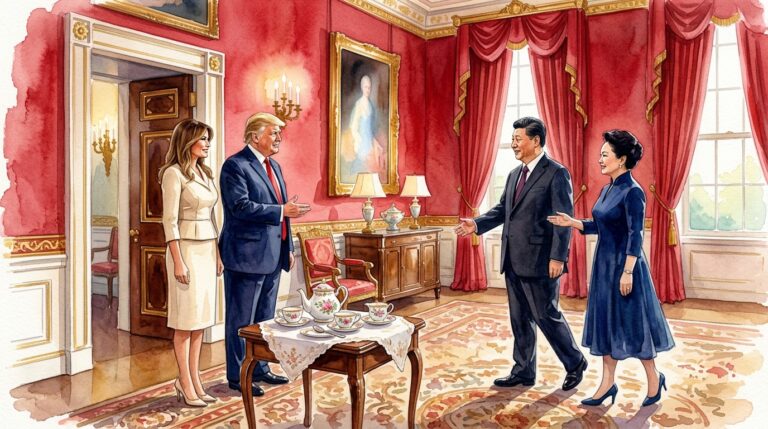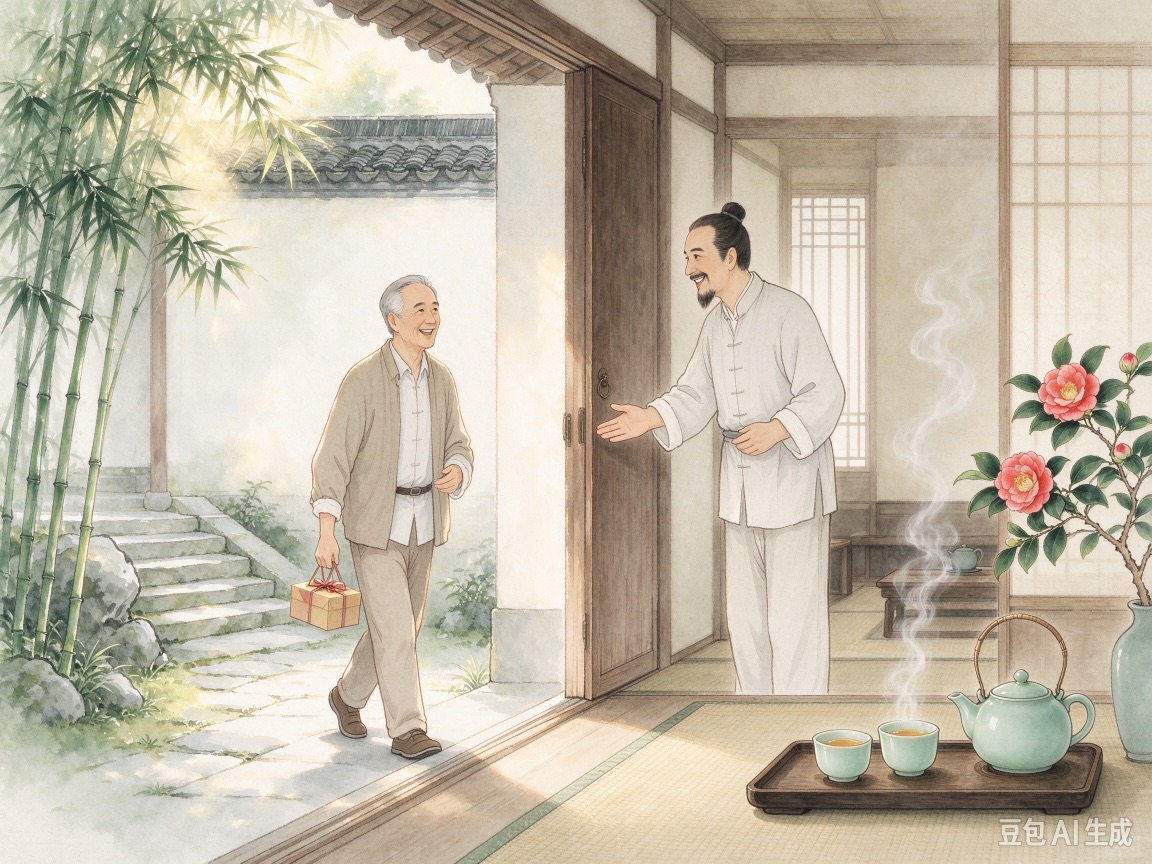

There are many ways to welcome a visitor. One may open the door with a smile, set food on the table, or pour a glass of wine. In China, however, the first gesture of welcome is often simpler: a host prepares tea.
The tea may be delicate or strong, expensive or ordinary. Its deepest meaning does not lie in its price. It lies in the time taken to boil the water, warm the teapot, and place a cup before another person. To offer tea is to say, without ceremony or explanation, Please sit down. You are welcome here.
Tea and the Art of Hospitality
Tea has been part of Chinese culture for more than a thousand years. Over time, it became much more than a daily drink. It was associated with literature, philosophy, art, and the cultivated life. Lu Yu’s Classic of Tea helped elevate tea from a common beverage into an art worthy of careful attention.
This history helps explain why tea has such a natural place in hospitality. In the Confucian tradition, sharing tea is connected with human relationships and the duty to treat others with courtesy. The Chinese tea ceremony itself is often described through the idea that courtesy comes first.
A guest does not need to be important for tea to be served. A neighbor dropping by, an old friend, a relative returning home, or a stranger entering a household may all be offered a cup. In many Chinese homes, serving tea when visitors arrive remains a familiar custom.
The gesture is quiet, but it is never empty. Tea can express welcome, respect, gratitude, or even an apology. Younger members of a family may serve tea to their elders; newly married couples may offer tea to older relatives; and, in some circumstances, tea forms part of a formal apology.
The Welcome Begins Before the First Sip
A good cup of tea begins with attention.
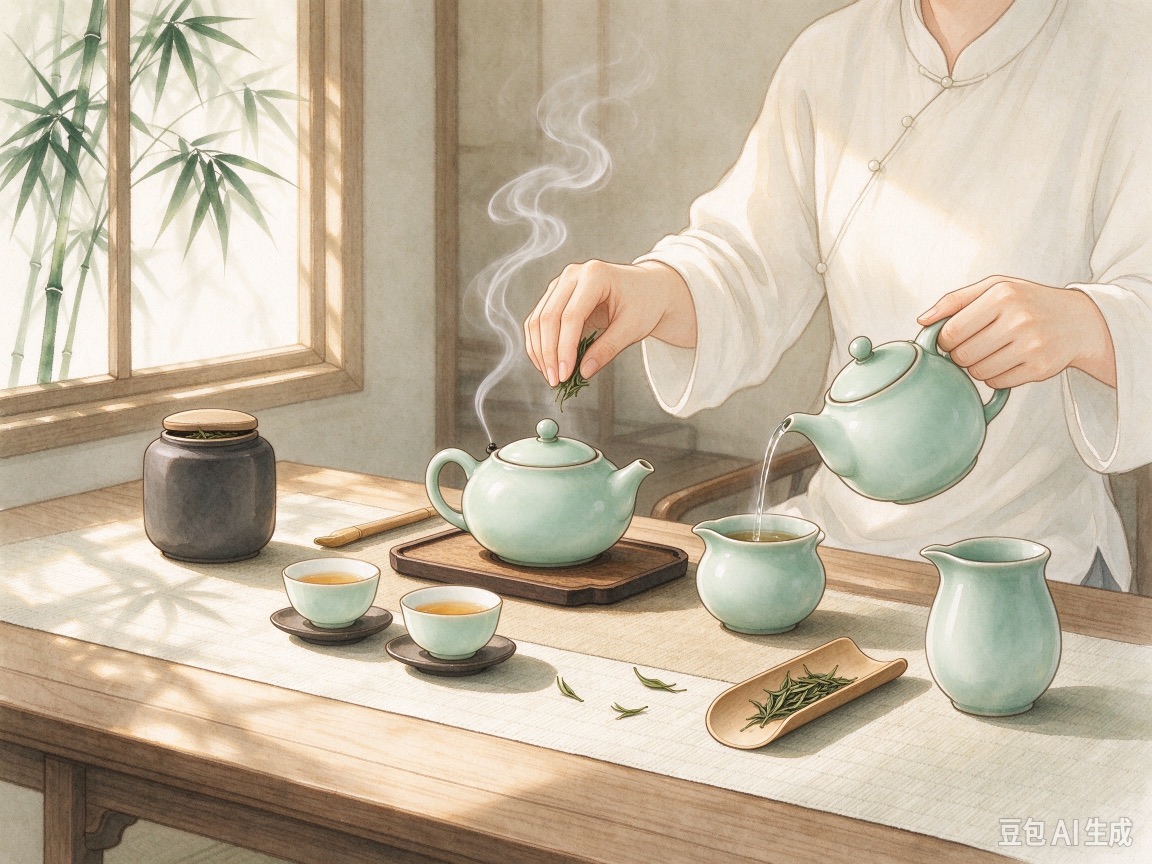
The host chooses the tea, considers the water, prepares the cups, and pours carefully. None of this needs to be grand. Hospitality is not a performance, and the finest tea can lose its charm when served without warmth. A plain tea, offered sincerely, may be remembered longer than a rare tea poured with indifference.
Traditional Chinese tea culture gives importance to every part of the experience: preparing the tea, serving it, appreciating its appearance, smelling its fragrance, and tasting it slowly. The guest is not simply handed a drink. The guest is invited to share a moment.
That moment should not be hurried. Tea asks people to sit still for a while. Its fragrance rises and disappears; its flavor changes from the first sip to the last; its warmth remains briefly in the hands. Conversation, too, finds a different rhythm around a teapot. People speak more slowly. Silence becomes less awkward. The visit begins to feel less like an appointment and more like time spent together.
A Small Ceremony, Not a Rigid Rule
Tea etiquette can be formal, particularly in a traditional teahouse or during a tea ceremony. Guests may be seated according to custom, with the places of honor given to elders, teachers, or distinguished visitors.
When the first infusion is served, guests may first appreciate its fragrance before taking a sip. In a formal setting, this first taste is also an occasion to thank the host.
There is also a charming custom known as finger tapping, or finger kowtow. Instead of offering a spoken word of thanks, a guest gently taps two or three fingers on the table while tea is being poured. Today, the gesture is understood simply as a quiet expression of gratitude to the person serving the tea.
But such customs should be understood in the right spirit. They are not tests that a guest must pass. The heart of tea etiquette is consideration: do not rush, do not treat the tea carelessly, and do not forget the person who prepared it.
The Pleasure of Drinking Slowly
Traditional tea culture has always valued the setting in which tea is taken. Earlier writers imagined tea being enjoyed in peaceful surroundings—within a courtyard, beside a bridge, in a pavilion, or among trees and cool breezes. A calm setting allows the drinker to give the tea his or her full attention.
This may sound distant from modern life, but the principle remains easily understood. A cup of tea is best enjoyed when one is not distracted. It is not something to swallow while running out the door. It deserves at least a moment of stillness.
In a traditional teahouse, guests are encouraged to sip rather than empty the cup at once. Tea reveals itself gradually, moving from fragrance to bitterness, from astringency to sweetness, and finally to its lingering aftertaste. To drink slowly is not merely good manners; it is also a way of noticing what is in the cup.
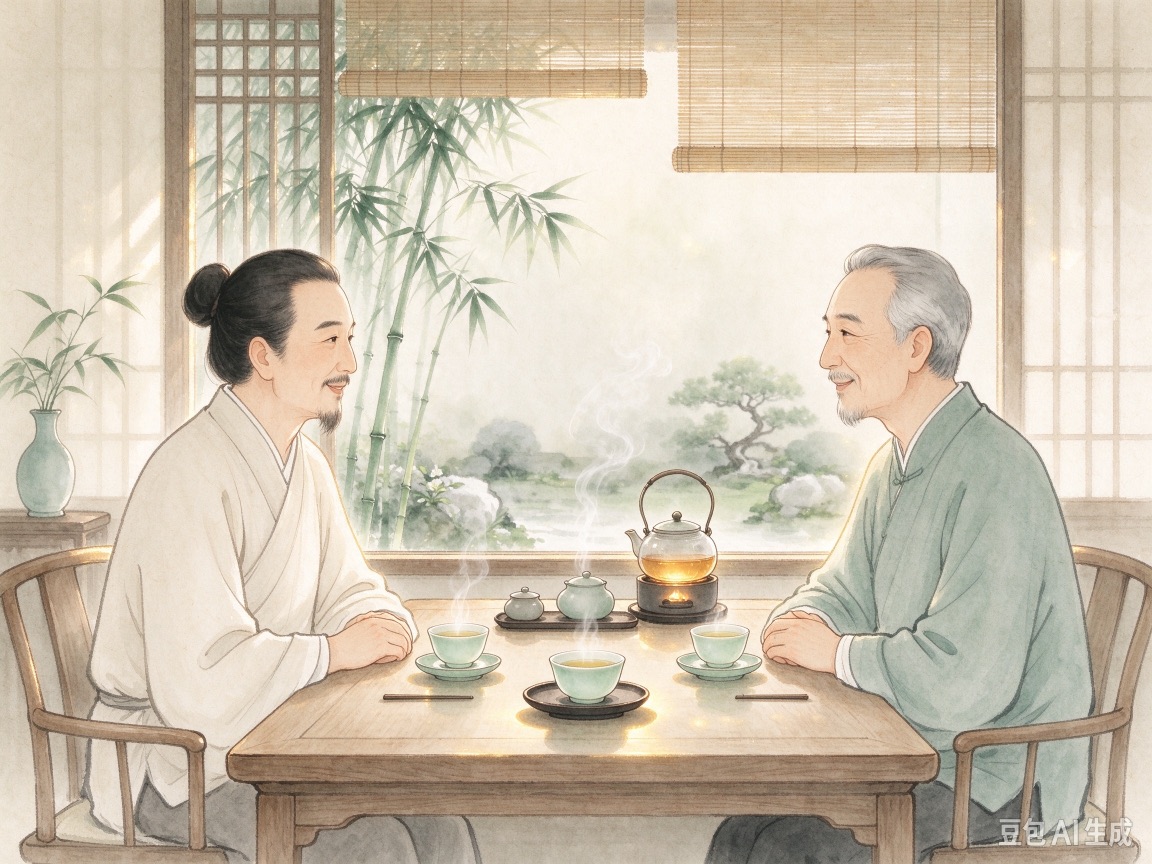
Tea Makes Room for Conversation
A meal can fill a table, and wine can enliven a gathering. Tea does something quieter. It leaves room.
The host and guest may discuss the tea, the weather, a journey, or nothing in particular. The important thing is not always the subject of conversation. It is the shared pause created by the teapot.
Traditional tea writing often links tea with poetry, calligraphy, painting, and music. During the Tang and Song dynasties, tea became part of the world of scholars and artists. This association is not accidental. Tea encourages a state of mind in which people notice small things: the sound of water, the color of the liquor, the shape of a cup, or the changing expression on a friend’s face.
A host who serves tea offers more than refreshment. He or she offers attention, time, and a place in which conversation may unfold naturally.
The Guest’s Answer
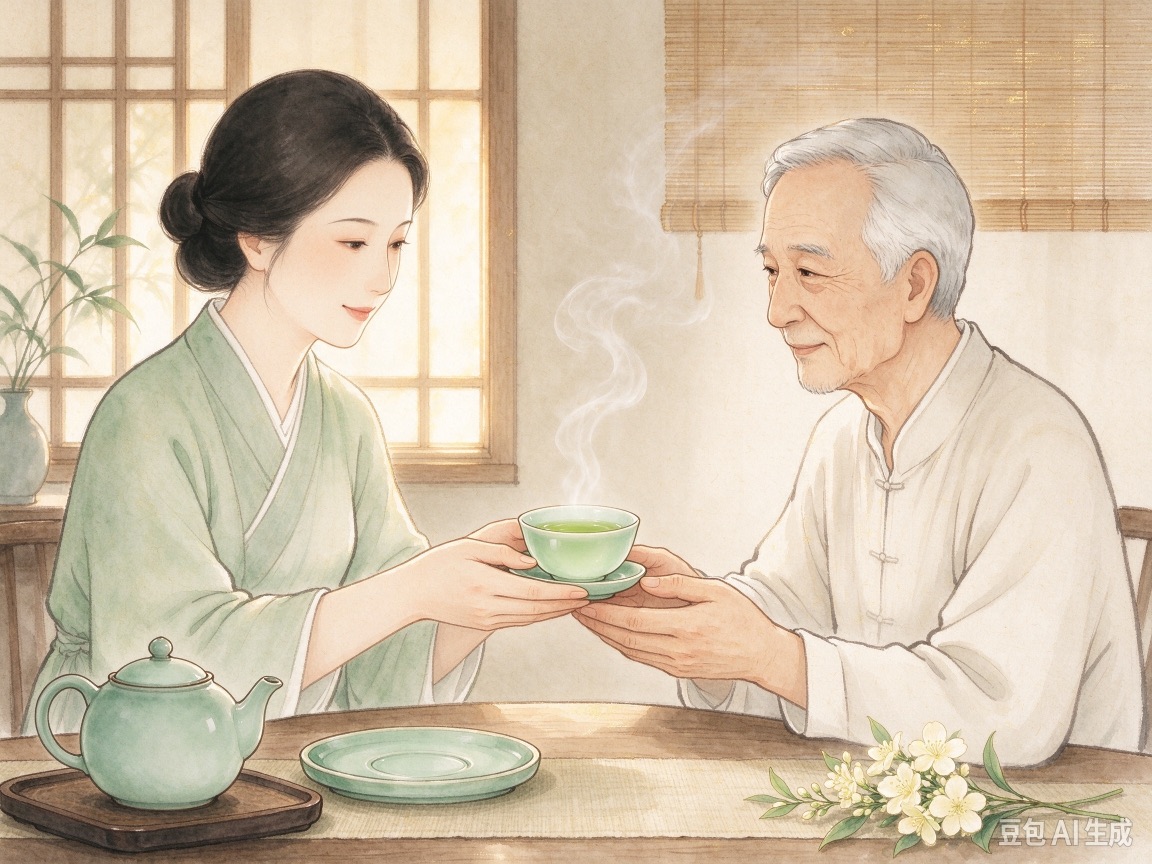
Hospitality is a dialogue. The host offers tea; the guest receives it with appreciation.
In some Chinese communities, refusing tea may be considered discourteous, while accepting at least a sip is regarded as a sign of gratitude. Of course, customs vary between regions, families, and individuals. A thoughtful host should always respect a guest’s preferences, health, and circumstances.
What matters is not strict obedience to every rule. What matters is recognizing the kindness behind the cup.
A Tradition That Still Belongs to Everyday Life
Tea ceremonies may be elegant, with beautiful utensils and carefully arranged movements. Yet tea hospitality does not depend on a perfect setting. It can take place in a family kitchen, a quiet office, a village home, a modern apartment, or a formal meeting room.
The finest hospitality is often modest. A host notices that a guest’s cup is empty and fills it again. A guest pauses to thank the person who has poured. Between them, a simple act becomes a form of respect.
This is why tea remains one of the most graceful ways to welcome a guest. It does not demand attention for itself. It creates a little warmth, a little calm, and a little space for people to meet one another as human beings.
When a cup of tea is placed before us, we are being offered more than a beverage. We are being invited to stay awhile.