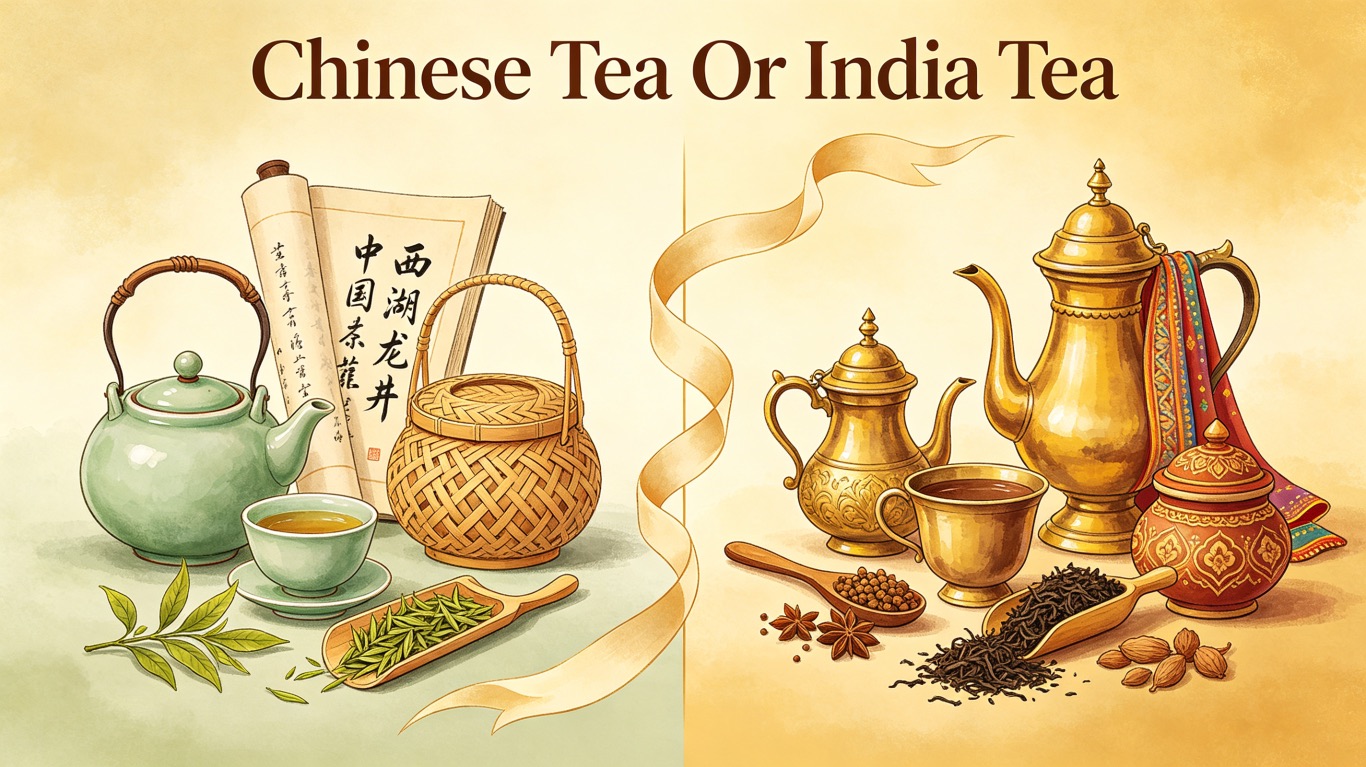

Chinese Tea Or India Tea
Tea, a beverage steeped in history and culture, has captivated palates worldwide for centuries. While its origins are often traced back to China, India has also emerged as a significant tea-producing nation, each with its unique varieties, cultivation methods, and cultural significance. Understanding these differences can help ordinary people make informed choices when selecting tea.
Origins and Domestication
The story of tea begins in ancient China, where it was first discovered and cultivated. Over millennia, China developed a rich diversity of tea types, including green, white, yellow, oolong, black, and fermented teas, each with distinct processing methods and flavor profiles. The domestication of the tea plant in China has led to a wide array of cultivars, with specific regions becoming renowned for particular teas, such as Longjing (Dragon Well) green tea from Hangzhou or Tieguanyin oolong from Anxi County .
India, while a later entrant into the global tea trade, has a deep-rooted tea culture, particularly in regions like Assam and Darjeeling. The Assam tea plant (Camellia sinensis var. assamica) is believed to have originated in the northeastern part of India, distinct from the Chinese variety (Camellia sinensis var. sinensis) . Indian tea cultivation was significantly boosted during the British colonial era, leading to the establishment of large tea estates and the development of robust tea varieties suited to the local climate and consumer preferences.
Key Differences in Tea Varieties and Characteristics
The differences between Chinese and Indian teas are evident in their varieties, flavor profiles, and typical consumption methods.
Chinese Teas:
China boasts an extensive range of teas, categorized by their processing methods:
- Green Tea: Unoxidized and minimally processed, retaining a fresh, grassy flavor (e.g., Longjing, Biluochun) .
- White Tea: Minimally processed, withered, and dried, offering delicate, subtle flavors (e.g., Silver Needle, White Peony) .
- Yellow Tea: A rare category involving a unique “smothering” process that imparts a mellow taste .
- Oolong Tea: Partially oxidized, falling between green and black teas, with a wide spectrum of flavors from floral to roasted (e.g., Tieguanyin, Da Hong Pao) .
- Black Tea (Red Tea in China): Fully oxidized, resulting in robust, malty, or fruity flavors (e.g., Qimen Hong Cha) .
- Fermented Tea (Dark Tea): Undergoes microbial fermentation, leading to earthy, smooth, and complex flavors (e.g., Pu-erh) .
Chinese teas are often appreciated for their nuanced flavors and aromas, with a strong emphasis on the tea’s origin and processing techniques influencing its quality .
Indian Teas:
Indian tea culture is largely defined by its strong, full-bodied varieties, often consumed with milk and spices.
- Assam Tea: Known for its bold, malty flavor, Assam tea is a fully oxidized black tea that stands up well to milk and sugar, making it a popular base for chai .
- Darjeeling Tea: Grown in the Himalayan foothills, Darjeeling teas are often called the “champagne of teas” for their delicate, floral, and muscatel notes. They are typically enjoyed without milk .
- Nilgiri Tea: From the southern hills of India, Nilgiri teas are aromatic and brisk, often used in blends.
- Chai: This is not a specific type of tea but rather a preparation method – tea brewed with milk, sugar, and a blend of spices (masala). Masala chai is a ubiquitous and comforting beverage in India .
- Kahwa: A traditional green tea preparation from Kashmir, often brewed with gentle spices like cardamom and saffron, typically enjoyed without milk .
- Ginger Tea and Cardamom Chai: These are popular variations focusing on specific spices for warmth and aroma, often consumed daily for comfort and well-being .
Indian teas are often valued for their comforting, robust qualities and their role in daily rituals, adapting to local climates and lifestyles .
How Ordinary People Can Choose Tea
For the average consumer, navigating the vast world of tea can be daunting. Here are some practical tips for choosing tea:
- Consider Your Preference:
- Flavor Profile: Do you prefer light and floral, grassy and fresh, robust and malty, or spicy and warming? Chinese green teas offer delicate notes, while Assam teas provide a strong, malty base. Oolongs offer a wide spectrum, and chai provides a spiced, milky experience.
- Caffeine Level: Black teas and some green teas contain caffeine, while herbal teas are typically caffeine-free. If you’re sensitive to caffeine or drinking tea in the evening, opt for herbal or decaffeinated options .
- Explore Different Types:
- For a Morning Boost: Try a strong Assam black tea or a robust Chinese black tea.
- For a Delicate Sip: Explore Chinese green teas like Longjing or white teas like Silver Needle. Darjeeling teas are also excellent choices for a lighter, aromatic experience.
- For Comfort and Warmth: Masala chai, ginger tea, or cardamom chai offer comforting, spiced flavors, often enjoyed with milk .
- For Relaxation: Herbal teas like chamomile or peppermint are naturally caffeine-free and soothing .
- Read Descriptions and Reviews:
- Look for details about the tea’s origin, processing method, and flavor notes. Reputable retailers often provide brewing instructions and customer reviews that can offer insights into taste and quality .
- Consider Quality and Sourcing:
- Look for terms like “single origin,” “hand-picked,” or specific regional designations (e.g., Darjeeling, Uji, Longjing) as indicators of quality .
- If sustainability and ethical practices are important, look for certifications like USDA Organic or Fair Trade .
- Experiment and Enjoy:
- The best way to find your favorite tea is to try different varieties. Start with smaller quantities or sample packs to explore a range of flavors before committing to a larger purchase. Tea tasting can be a rewarding experience, focusing on visual cues, aroma, flavor, mouthfeel, and finish .
Ultimately, the choice of tea is a personal journey. Whether you are drawn to the subtle complexities of Chinese green tea or the comforting embrace of Indian chai, understanding the origins and characteristics of different teas can enhance your appreciation and enjoyment of this timeless beverage.