
When President Donald Trump welcomed President Xi Jinping to the White House, the gesture that lingered was not a handshake, a speech, or a formal dinner. It was a cup of tea.
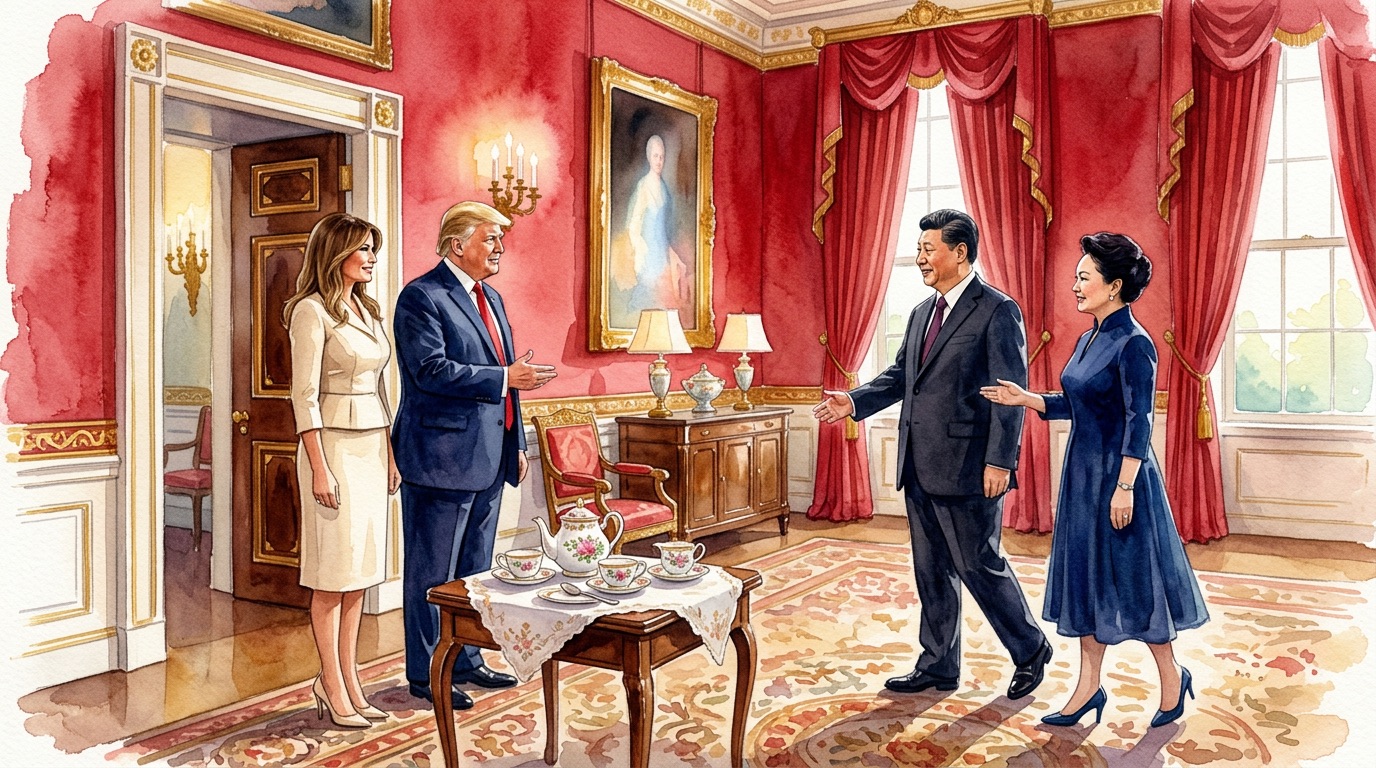
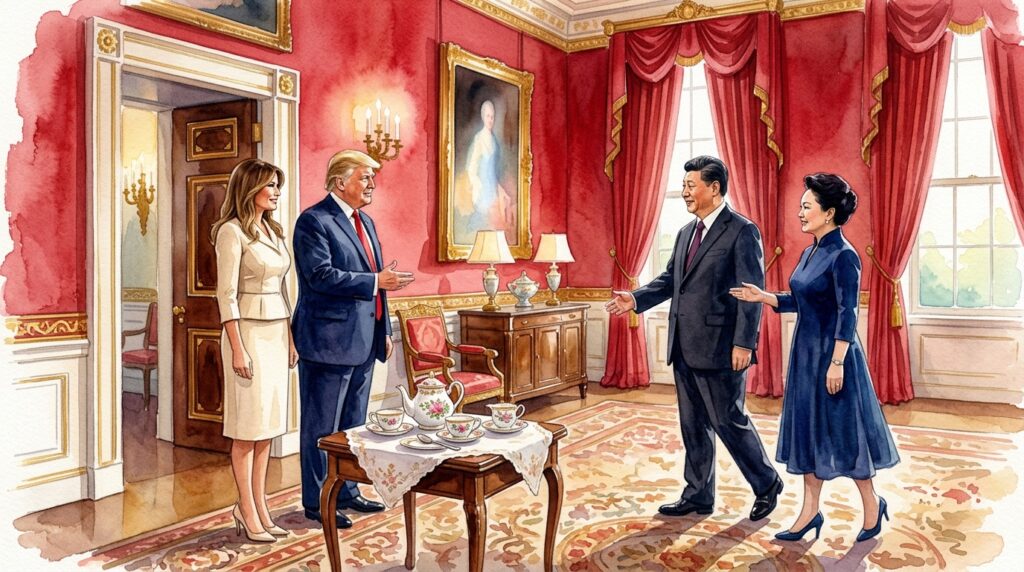
On the morning of September 25, 2026, Trump and First Lady Melania Trump received Xi Jinping and Madame Peng Liyuan in the White House’s Red Room. They did not offer coffee. They offered tea. In a house better known for its morning coffee and hurried routines, the teapot introduced a different kind of time—slower, quieter, and more attentive.
It was a small gesture, but it carried a language of its own.
A Welcome That Needed No Translation
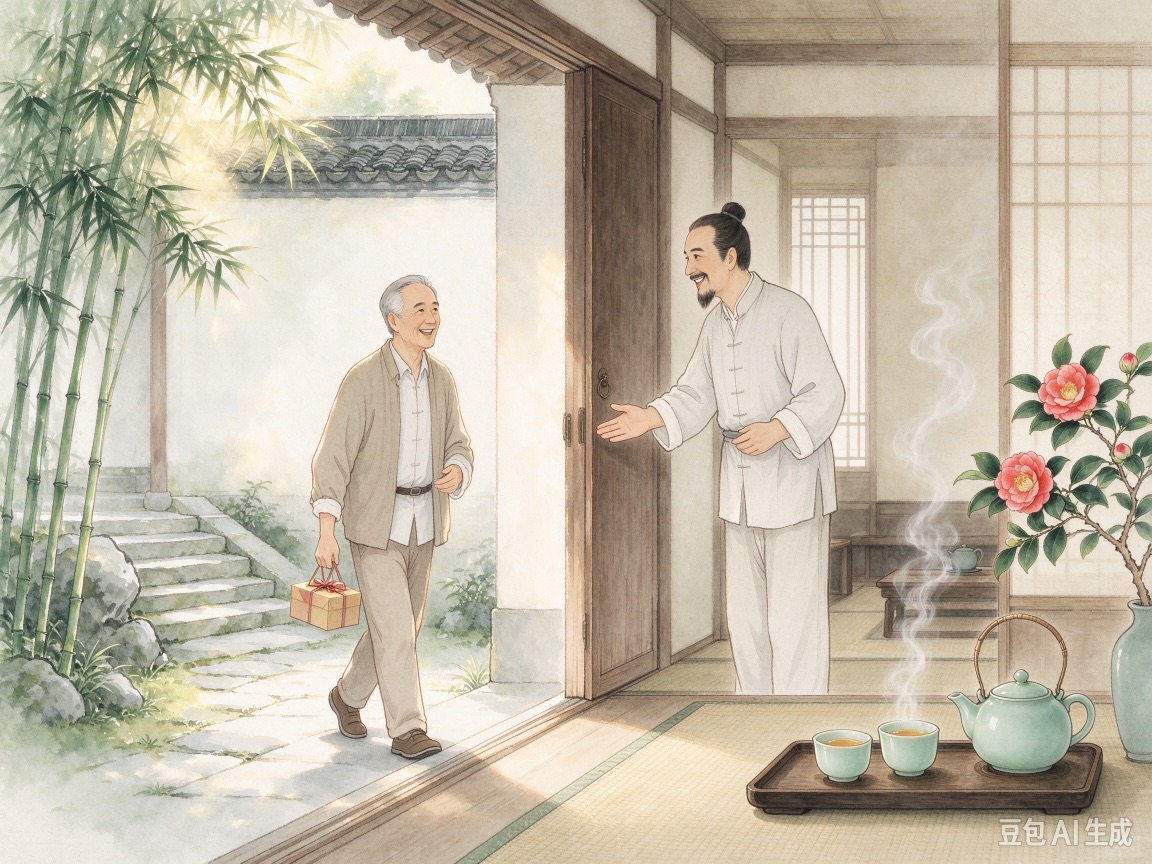
Tea has long been part of the way guests are received in China. When someone arrives at the door, tea is often the first thing placed before them. It is not simply a drink to relieve thirst. It is a way of saying: sit down, rest a while, and make yourself at home. Tea serves as an important medium of courtesy and human relationships in Chinese culture.
For this reason, serving tea can feel more intimate than arranging a formal banquet. A banquet displays abundance; tea offers attention. It does not overwhelm the guest. It makes room for the guest.
That was the quiet significance of the White House tea. Trump was receiving China’s leader on American soil, yet he chose a form of hospitality deeply familiar to his visitor. The setting remained the White House, with its grand rooms and long history. But for a little while, the welcome followed a Chinese rhythm.
The message was not that America had ceased to be America. It was that a host may honor a guest by meeting him in a language he knows.
Not Coffee, but Tea
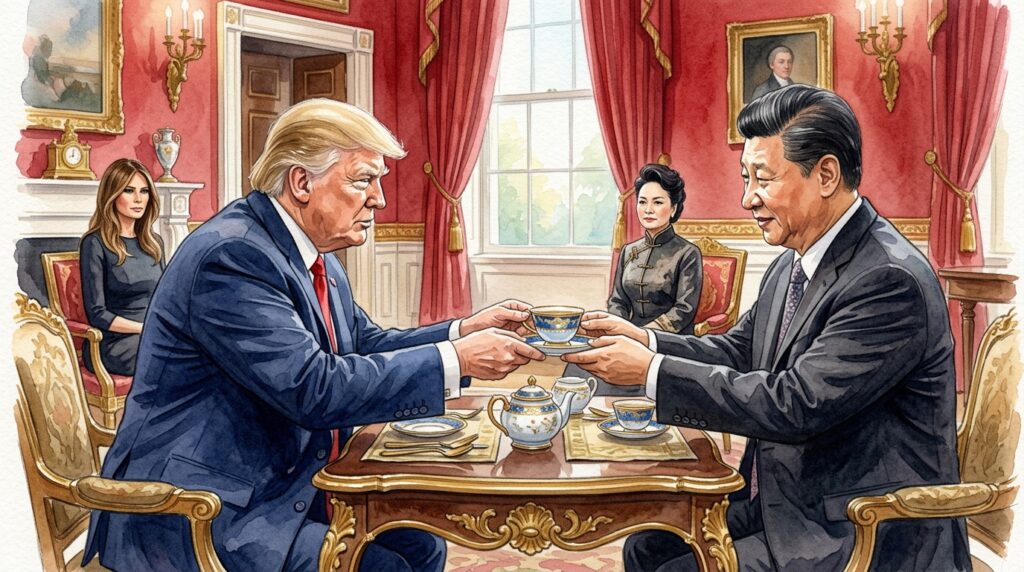
Coffee is often associated with movement. It belongs to the morning, to offices, to airports, to conversations squeezed between appointments. Tea asks for something else. It asks the hand to remain around the cup. It asks the guest to notice the warmth, the fragrance, and the person who has poured it.
A cup of coffee might accompany a meeting. Tea can soften the meeting itself.
At the White House, tea created a gentler space between two presidents whose countries have often spoken to one another through tariffs, technology, security, and strategic rivalry. The tea did not erase those difficulties. Nor could a cordial morning settle every disagreement. But hospitality does not always begin by solving problems. Sometimes it begins by making it possible for people to sit together without immediately becoming adversaries.
During the tea, Xi thanked the Trumps for their hospitality. Through a translator, he said that everything had been done “to the highest order of perfection,” with thought given to every detail. He compared the two leaders to people charting the course of the great ship of China-U.S. relations.
Perhaps the words were diplomatic. Diplomacy, however, is often made from such details: the room chosen, the cup offered, the pause before a conversation begins.
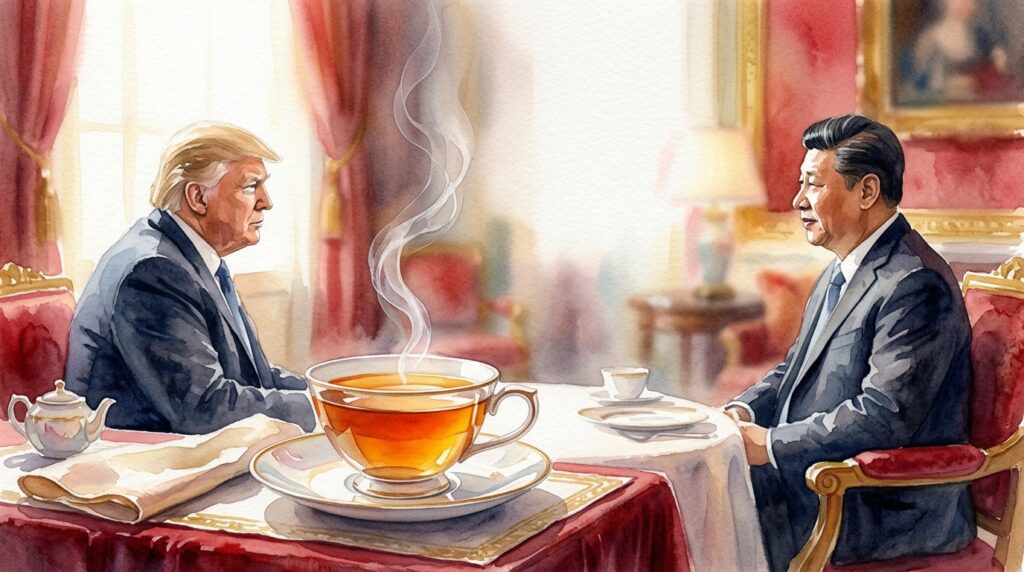
The Chinese Way of Making a Guest Feel at Home
To serve tea is to pay attention to the guest’s presence.
In traditional Chinese tea etiquette, the honored guest is given a place of respect, and the first infusion is received with appreciation. The guest may smell the tea before taking a sip, allowing its fragrance to arrive first.
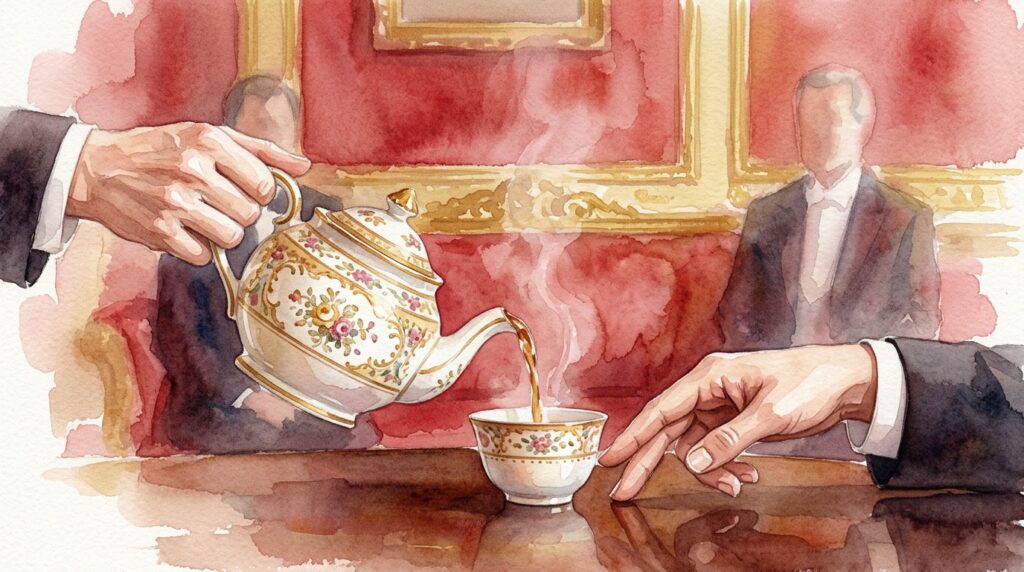
There is also the familiar gesture of tapping two fingers lightly on the table while tea is being poured. Known as finger tapping, or finger kowtow, it is a quiet way of thanking the person who serves the tea. No speech is needed. A small movement says enough.
These customs have something in common: they turn drinking tea into a relationship between host and guest. The tea matters, but the manner of offering it matters more.
This is what made the White House scene memorable. Trump did not merely provide a beverage. He adopted, for that moment, a form of welcome that would feel instinctively familiar to a Chinese guest. In the heart of Washington, the Red Room became briefly more like a gracious Chinese household: a place where the visitor was not left standing at the edge of someone else’s world, but invited to sit down within it.
That is the feeling behind the Chinese expression 宾至如归—that a guest should feel as though he has returned home.
Hospitality Before Agreement
The most difficult conversations often begin with formal positions. Each side arrives carrying its history, its interests, and its carefully prepared words. Tea does not remove these burdens, but it can set them down for a moment.
The White House visit included discussions of major issues such as trade, artificial intelligence, security, and the wider relationship between the two countries. Trump spoke of the importance of building a relationship that promotes prosperity and security, while Xi called for the two countries to act as responsible major powers.
Yet beside these large phrases stood something smaller and more human: two couples seated together over tea.
A diplomatic banquet can be magnificent, but magnificence can also create distance. Tea narrows the distance. It brings the ceremony down to the level of ordinary human gestures—the hand that pours, the cup that is received, the smile that accompanies it.
One does not need to agree with a guest in order to welcome him. Hospitality comes before agreement. It says that disagreement need not make courtesy impossible.
A Gesture Across Cultures
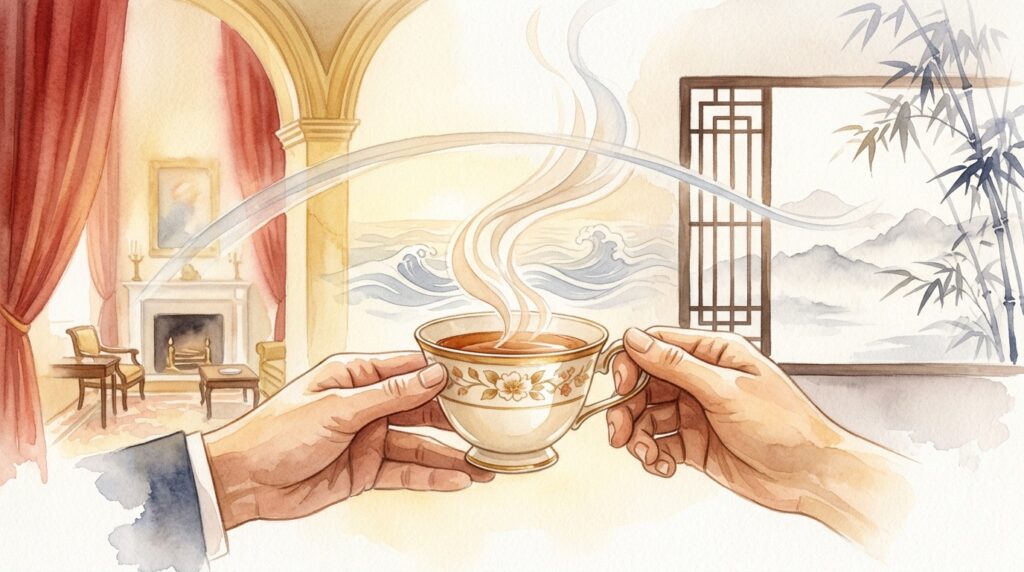
There was a certain elegance in the contrast. The American president, in the White House, used a gesture long associated with Chinese hospitality. He did not imitate a ceremony for display. He offered a familiar courtesy in a place where it acquired new meaning.
The gesture traveled in both directions. Xi, visiting Washington, was received with an element of home. Trump, as host, showed that hospitality is not weakened when it borrows from another culture. It is strengthened. To welcome someone well is to understand that the guest should not have to leave every part of himself at the door.
The tea may have been served in an American presidential residence, but its spirit was universal: respect the guest, give him time, and let the first moments be warm.
No report has publicly identified the specific variety or brand of tea served that morning. That detail, in a way, seems less important than the act itself. The meaning was not contained in the name on the tea package. It was in the decision to serve tea at all.
The Warmth of Being Received
There are moments in international affairs that belong to history books, and there are moments that remain in memory for quieter reasons.
A cup of tea is one of those quiet things.
It cannot settle the future of two nations. It cannot substitute for patient negotiation. But it can change the atmosphere in which negotiation begins. It can tell a visitor that, despite the distance between countries, there is a place prepared for him.
That morning in the Red Room, President Trump offered Xi Jinping more than a drink. He offered him a form of welcome that carried the warmth of home across the Pacific.
And for a little while, in the middle of Washington, the language of hospitality was spoken not through coffee, but through tea.